Who Owes the Printer? A Renter’s Guide to Sharing Ink Costs Fairly

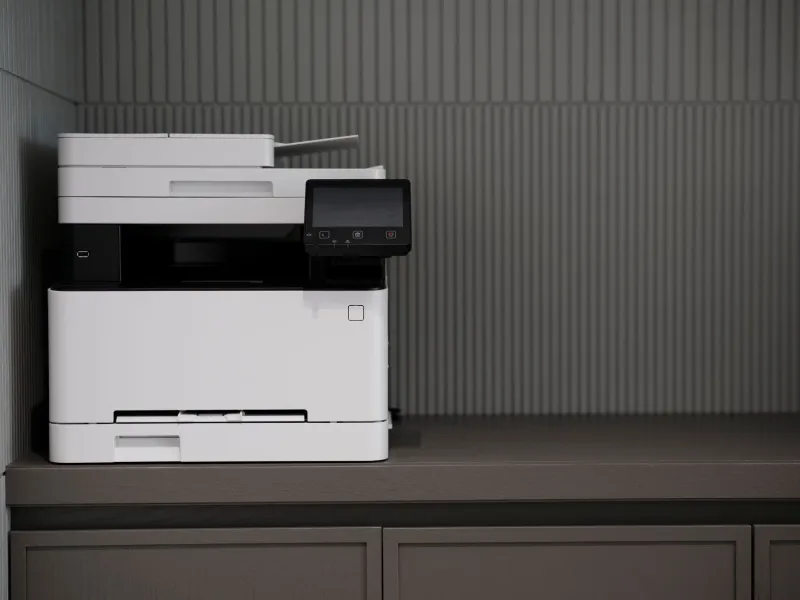
Photo: Kgbo, CC BY-SA 4.0, via Wikimedia Commons
There is a very specific kind of tension in a shared house. It is not the washing-up, and it is not the thermostat. It is the printer. One person prints a boarding pass at 6am, another runs off a 90-page dissertation draft, and someone else produces a single recipe because they refuse to read it off a phone in the kitchen. Then the ink runs out, and suddenly everyone is very interested in who printed what.
The problem is rarely the printer itself. It is that ink feels like a shared cost until the moment somebody has to pay for it. In 2026, with compatible cartridges and high-yield multipacks widely available, there is no reason a shared house needs to fund its printing through guilt and passive-aggressive notes. A small, fair system works better.
Start with the printer, not the spreadsheet
Before anyone downloads a budgeting app, agree on what the house printer is actually for. A shared inkjet that everyone uses for photos, essays and eBay labels will burn through cartridges far faster than a mono laser that only handles forms and return labels. If you are lucky enough to have both, decide which one is the house workhorse and which one is the occasional colour machine.
For most UK rentals, a single colour inkjet is the reality. That means the fund needs to cover two things: the base cost of keeping the printer alive, and the variable cost of what people actually print.
The two-part kitty: base costs plus page costs
A fair shared print fund is not just “everyone puts in a tenner”. That works until one housemate prints a photo book and everyone else prints a council tax letter. Instead, split the fund into two pots.
Pot one: the base fund
This covers the boring stuff — a spare black cartridge, a pack of A4 paper, and a small buffer for the month when a colour cartridge dies without warning. Divide this equally. It is a shared appliance, like the kettle or the washing machine. Everyone benefits from it being ready to use.
A sensible starting point for a four-person house is £6–£10 each per month, depending on how much the household prints. That buys a reasonable compatible black cartridge and a ream of paper, with a little left over. If the house prints very little, drop it. If someone is printing a thesis every week, see pot two.
Pot two: the page pot
This is where the fairness comes in. Work out a rough cost per page for your usual cartridge. Take the price of a compatible high-yield black cartridge and divide it by a realistic page yield — not the fantasy number on the box, but a sensible estimate for text documents. For many home inkjets, that lands somewhere between 1p and 3p per standard page. Colour pages cost more; photo prints cost more again.
Then keep a simple shared page log. It can be a note on the fridge, a shared spreadsheet, or a note on the kitchen whiteboard. Each person records the number of pages they print in a week, with a separate line for colour or photo prints. At the end of the month, the page pot is topped up in proportion to use.
A simple formula looks like this:
Monthly top-up = (your pages × cost per page) + your share of the base fund
That is it. No arguments about whose turn it is to buy ink, and no silent resentment when someone prints a 40-page gig ticket confirmation.
What counts as a page?
This is the part where shared houses get creative. A page is not always a page. A single-sided A4 text document is one thing; a full-colour photo on glossy paper is another. Agree on a few house rules.
- Standard mono A4: count as one page.
- Colour A4: count as two or three pages, depending on how much ink is covered.
- 6×4 photo prints: count as three or four pages.
- Double-sided printing: count as two pages, because it is two sides of ink.
- Failed prints and misprints: count them. The ink was still used.
You do not need to be forensic about it. The aim is rough fairness, not accountancy. A shared note that says “Sarah: 22 pages, 2 colour” is enough.
Compatible cartridges and high-yield multipacks in the kitty
The shared fund only works if the ink is affordable in the first place. This is where compatible cartridges earn their place. A high-yield compatible black cartridge usually costs far less than the branded equivalent, and a multipack can bring the cost per page down further for houses that print regularly.
A few practical rules for the kitty:
- Buy black in high-yield if the house prints mostly documents.
- Buy a colour multipack only if people actually print colour. Otherwise the colour cartridges sit there drying out.
- Keep one sealed spare black cartridge in the cupboard. It stops the “printer is dead” panic on a Sunday night.
- Avoid stocking up on six cartridges just because they were on offer. Shared houses move out, and ink has a shelf life.
If you want to compare costs, do it per page rather than per box. A £20 cartridge that prints 300 pages is worse value than a £28 high-yield cartridge that prints 600. The CompatInk UK approach is not about buying the cheapest box on the shelf; it is about buying the box that makes sense for the house.
The rules that stop the row
A print fund needs a few agreed boundaries, ideally before the first argument. Put them in the house chat and keep them short.
- The printer is not a photocopier. If someone needs 200 pages for a work project, they buy their own paper and contribute extra to the page pot.
- No mystery cartridges. If you replace a cartridge, note it in the shared log and put the receipt in the kitty envelope or shared folder.
- Colour is a choice, not a default. Print in mono unless colour is genuinely needed. It saves money and reduces the chance of a dried-up colour head.
- The fund has a float. Keep £15–£20 in the kitty so a replacement cartridge can be bought without a group chat vote.
- Leavers settle up. When someone moves out, they pay their share of the remaining ink and paper, or they leave the unopened cartridge they bought. No leaving the house with a full drawer of someone else’s ink.
A simple monthly routine
On the first weekend of the month, spend ten minutes on the printer. Check the ink levels, note what is left in the kitty, and add up the page log. Top up the base fund equally and the page pot by use. Buy a replacement black cartridge if the spare has gone in. Then forget about it until next month.
That small routine is the difference between a shared printer that quietly works and a shared printer that becomes a symbol of everything unfair in the house. In 2026, with compatible cartridges and a bit of basic maths, there is no need for the classic shared-house ink argument. The printer can just be a printer.