Too Hot, Too Cold, Too Damp: Where Brits Should (and Shouldn't) Keep Spare Ink
Buying a spare ink cartridge feels like forward planning. You avoid the panic purchase when the printer flashes a warning at 9pm, and you might even save a few quid by buying when the price is right. But a spare cartridge is not a tin of beans. It has a shelf life, delicate seals and — in the case of inkjet models — a printhead or nozzle plate that does not appreciate being treated like seasonal garden furniture.
The trouble is that British homes are full of places that seem sensible at the time. The loft has space. The shed has a shelf. The garage has a cupboard that nobody uses. And then there’s the sunny windowsill, which feels tidy until you remember what a summer afternoon can do to a sealed plastic bag.
The loft: Britain’s most optimistic ink graveyard
Lofts are not storage rooms. They are weather simulators. In a warm spell, the space under a tiled roof can get properly hot, especially in a south-facing house with poor ventilation. In winter, it can swing cold. Between the two, you get condensation — the kind you notice on the inside of a skylight, or on anything plastic that has been up there since the last time someone looked for the Christmas decorations.
Inkjet cartridges contain water-based ink, foam or sponges, and tiny seals designed to keep the whole thing stable until you clip it in. Heat encourages evaporation and pressure changes inside the cartridge. Repeated temperature swings are worse than a steady temperature, because seals and joints are asked to expand and contract. If the cartridge has been sitting in a loft through a few hot and cold cycles, the ink may have thickened, air bubbles may have formed, or the nozzle area may have dried out before it ever reached the printer.
Toner is tougher, but not indestructible. Heat and humidity can make powder clump, and a damp loft is not a kind home for a sealed toner bag. If the bag has been breathing in warm, moist air, you can end up with a cartridge that looks fine but prints with streaks or a gritty background.
Sheds and garages: damp with a side of frost
A shed or garage feels practical because it is out of the way. It is also the dampest, coldest, least stable part of many UK properties. Metal tools rust out there. Cardboard goes soft. A spare cartridge is not going to fare better.
Cold alone is not automatically fatal, but freezing and thawing is not helpful. More importantly, cold surfaces attract condensation when the air warms up. If a cartridge has been sitting in a garage at near-zero and you bring it into a warm kitchen and open it straight away, you are inviting moisture onto the contacts and nozzle area. For toner, damp is the bigger enemy: powder that has absorbed moisture can cake, and no amount of shaking will reliably fix it.
Garages also attract dust, and dust around the cartridge contacts or the protective tape is a nuisance you do not need. If you must keep a spare in a cold outbuilding, bring it indoors a good few hours before you plan to use it, and leave it in its sealed packaging while it adjusts.
The sunny windowsill and the steamy kitchen
A windowsill is not storage. It is a display shelf with UV exposure and a daily temperature see-saw. Sunlight can degrade packaging and labels, and the heat build-up behind glass is real even on a cloudy day. The kitchen is another popular spot, but kettles, dishwashers and cooking steam create exactly the kind of humid air that cartridge seals are meant to keep out. A bathroom cupboard is no better.
If you would not keep a bar of chocolate there, it is probably not right for spare ink.
What ‘unopened’ actually protects
An unopened cartridge has a useful head start: the manufacturer’s packaging, the protective tape or cap, and the sealed bag are all there to reduce exposure. But ‘unopened’ does not mean ‘hermetically sealed forever’. Packaging breathes. Seals age. Shelf life is real, even if the date is sometimes printed in a code rather than as a friendly ‘use by’ stamp.
That is why the original box and inner bag are worth keeping until the moment you install the cartridge. Do not unwrap a spare just to check it, then put it back. Do not decant cartridges into a plastic tub with other odds and ends. Keep them upright if that is how they were supplied, and avoid stacking heavy things on top of the box.
A boring cupboard is a good cupboard
The best place for spare ink is deeply unexciting: a cool, dry, dark cupboard at room temperature, away from radiators, boilers, external walls and steamy appliances. A hallway cupboard or a bedroom wardrobe shelf is usually fine. A cupboard in a conservatory is not. Neither is the top of a fridge or freezer, where warmth and vibration do their quiet work.
Keep one spare, not a bunker. If you print a lot — home-schooling worksheets, eBay labels, church newsletters, whatever it may be — a multipack can make sense, but check the shelf life and the date code before you buy. A bargain on ten cartridges is not a bargain if you use three and recycle the rest because they sat in a shed for two winters. Buy compatible cartridges from a retailer that stores them properly and has a clear returns policy, and label your spare with the date you bought it.
How to spot a cartridge that has had a hard life
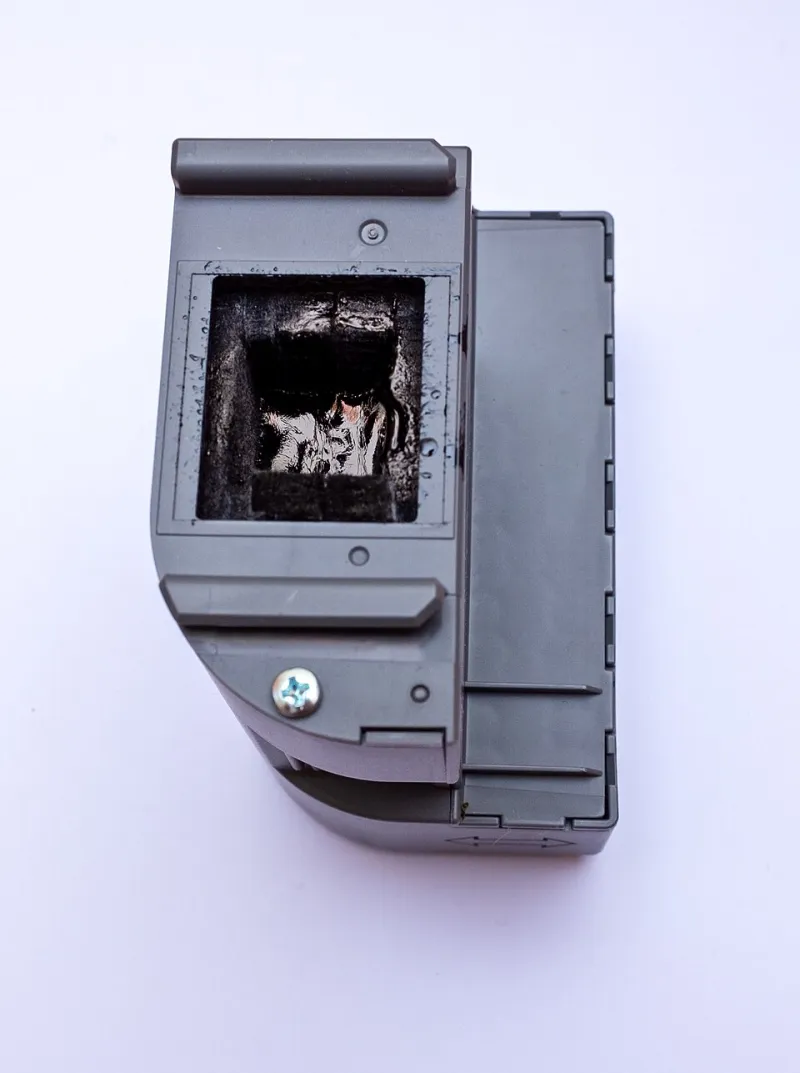
Before installing a spare that has been stored somewhere questionable, give it a look. Damaged outer packaging is a warning, not a disaster. Leaking ink, a bulging cartridge, crusted ink around the nozzle, a torn seal or toner powder that has visibly clumped are all reasons to stop. If there is condensation inside the sealed bag, let it settle and contact the retailer rather than fitting it and hoping.
A compromised cartridge can make a mess of your printer, and cleaning ink out of contacts or toner out of a paper path is far more hassle than asking for a replacement. If the cartridge is old, out of date or clearly been through a few temperature swings, do not gamble with it in a machine you rely on.
The sensible routine
Buy a spare when you see a good price, but keep it in the house, in its packaging, in a normal cupboard. Bring cold cartridges up to room temperature before opening. Check dates. Keep the number of spares modest. And if a cartridge has spent years in the loft, treat it as a recycling candidate rather than a backup plan. Your printer will thank you — and so will your next print job.